Insights Series

CMS-0057-F & Payer Modernization

Practical architecture and implementation guidance for health plans preparing for CMS-0057-F.

Explore FHIR APIs, CRD, DTR, PAS, terminology services, prior authorization, and modernization strategies for QNXT, Facets, HealthEdge, and other payer core administration platforms.

CMS-0057-F Payer FHIR API FHIR Prior Authorization CRD DTR PAS QNXT · Facets · HealthEdge
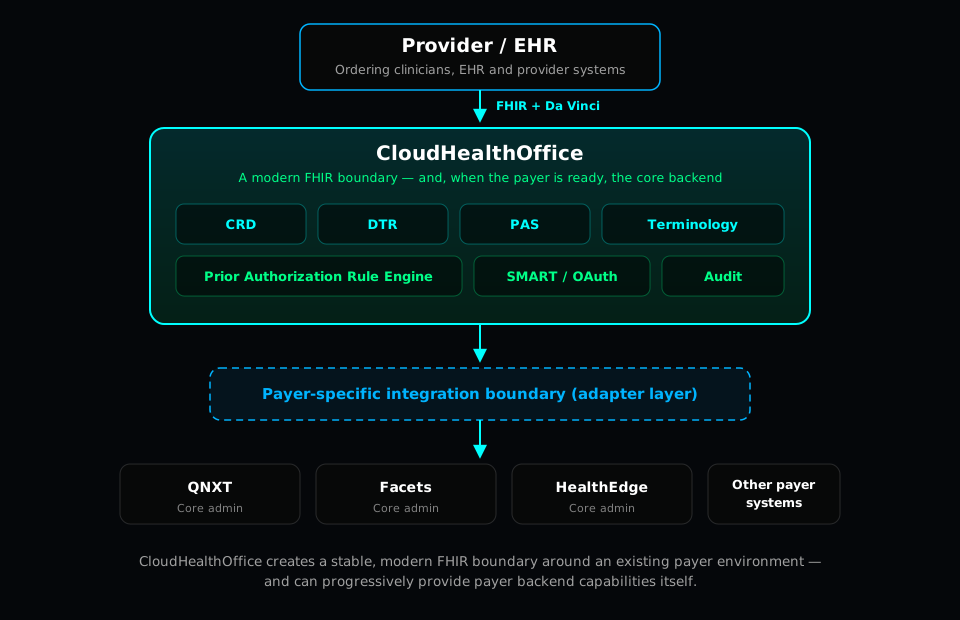
Vertical architecture diagram: Provider and EHR systems connect through FHIR and Da Vinci to Cloud Health Office — which provides CRD, DTR, PAS, terminology, a prior authorization rule engine, SMART/OAuth and audit — then through a payer-specific integration boundary to QNXT, Facets, HealthEdge and other payer systems. Cloud Health Office can also provide the payer backend itself.
Cloud Health Office establishes a modern FHIR boundary around an existing payer environment — and can progressively provide payer backend capabilities itself.

Start here

The foundational article for this series — how Cloud Health Office implements CRD, DTR, PAS, and terminology alongside a legacy core, and how the same architecture can eventually become the payer core backend.

The building blocks of CMS-0057-F interoperability

CRD

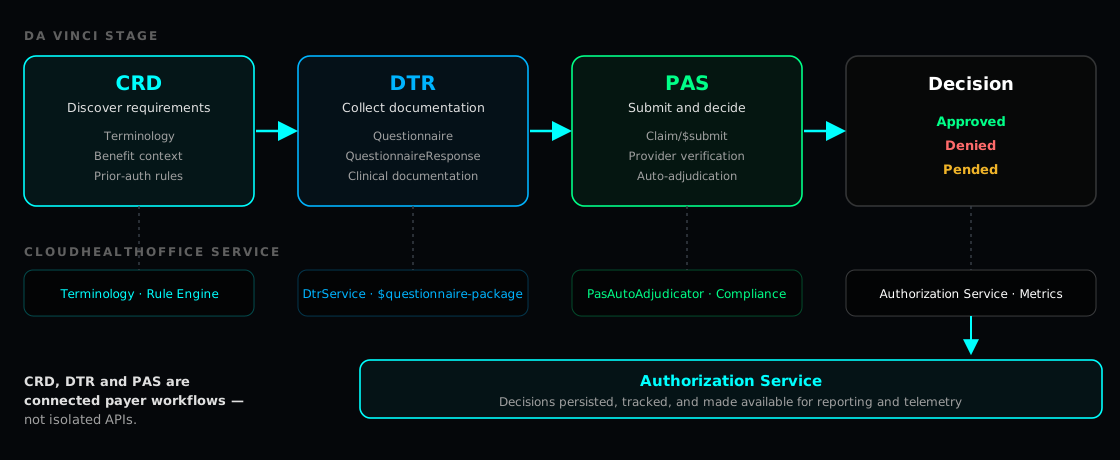
Coverage Requirements Discovery through CDS Hooks — what the payer requires at order-select and order-sign.

DTR

Documentation Templates & Rules — Questionnaire and QuestionnaireResponse workflows to collect what a provider must supply.

PAS

Prior Authorization Support — FHIR Claim/$submit with validation, provider verification, and decisioning.

Terminology

FHIR-native SNOMED CT, CPT, HCPCS, and ICD-10-CM translation via ConceptMap/$translate.

Payer adapters

Why QNXT, Facets, and HealthEdge adapters are payer-specific onboarding integrations, not universal preconfigured connectors.

Progressive modernization

Run beside the core, move domains over time, or operate as the payer core backend — behind a stable FHIR contract.

Related guidance & references

This series builds on the CMS-0057-F readiness overview and the platform's implementation documentation.

Before you sign

10 Questions to Ask Your CAPS Vendor Before Signing a CMS-0057-F SOW

Scope, system of record, Da Vinci coverage, policy digitization, integration pattern, interface ownership, identity, test evidence, exclusions, and the support boundary — with what a good answer to each sounds like.

Read the questions →
Definition of Done

CMS-0057-F Acceptance Scenarios

The scenarios Cloud Health Office proves — CRD, DTR, PAS, Patient and Provider Access, Payer-to-Payer, security, consent, and prior-auth metrics — with an honest status for each and the QNXT, Facets, or HealthEdge touch points.

See what's proven →
Evidence Hub

Implementation evidence

Executable evidence for these workflows: Payer-to-Payer, CRD/DTR/PAS, Provider Access security, and exchanges performed against an independently developed HL7 Da Vinci implementation.

Open the Evidence Hub →
Implementation Pillar

CMS-0057-F Implementation Architecture

The end-to-end architecture — FHIR APIs, CRD/DTR/PAS, security, terminology, and core integration — for implementing CMS-0057-F in a real health plan.

See the architecture →
Readiness Overview

CMS-0057-F Compliance

The vendor-neutral readiness layer, the four required FHIR APIs, and what CMS-0057-F actually requires of impacted payers.

Explore readiness →
Implementation Guide

Prior Authorization Guide

How CRD, DTR, and PAS come together into an end-to-end FHIR prior authorization workflow.

Read the guide →
Implementation Guide

Terminology Crosswalk

FHIR-native SNOMED CT to ICD-10-CM and CPT translation with ConceptMap/$translate.

Read the guide →
Architecture

Platform Architecture

How the services fit together — FHIR surface, terminology, rule engine, and payer integration.

See the architecture →

Modernize incrementally. Keep the FHIR boundary stable.

See how Cloud Health Office fits alongside your existing core — or becomes it — on your CMS-0057-F timeline.